Choose Equipment
Starting Equipment
When you create your character, you receive equipment based on a combination of your class and background. Alternatively, you can start with a number of gold pieces based on your class and spend them on items from the lists in this chapter. See the Starting Wealth by Class table below to determine how much gold you have to spend.
You decide how your character came by this starting equipment. It might have been an inheritance, or goods that the character purchased during his or her upbringing. You might have been equipped with a weapon, armor, and a backpack as part of military service. You might even have stolen your gear. A weapon could be a family heirloom, passed down from generation to generation until your character finally took up the mantle and followed in an ancestor’s adventurous footsteps. You may want to think about Expenses (Lifestyle) as well to decide how your character chooses to pay once at a inn or hearth.
Wealth
Wealth appears in many forms in a D&D world. Coins, gemstones, trade goods, art objects, animals, and property can reflect your character’s financial well-being. Members of the peasantry trade in goods, bartering for what they need and paying taxes in grain and cheese.
Members of the nobility trade either in legal rights, such as the rights to a mine, a port, or farmland, or in gold bars, measuring gold by the pound rather than by the coin. Only merchants, adventurers, and those offering professional services for hire commonly deal in coins.
Starting Wealth by Class
| Class | Funds |
|---|---|
| Barbarian | 2d4 × 10 gp |
| Bard | 5d4 × 10 gp |
| Cleric | 5d4 × 10 gp |
| Druid | 2d4 × 10 gp |
| Fighter | 5d4 × 10 gp |
| Monk | 5d4 gp |
| Paladin | 5d4 × 10 gp |
| Ranger | 5d4 × 10 gp |
| Rogue | 4d4 × 10 gp |
| Sorcerer | 3d4 × 10 gp |
| Warlock | 4d4 × 10 gp |
| Wizard | 4d4 × 10 gp |
Coinage
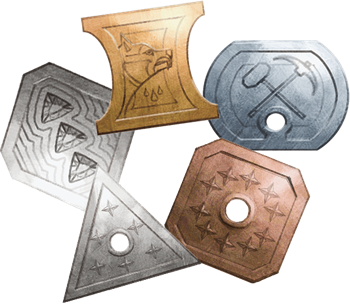
Common coins come in several different denominations based on the relative worth of the metal from which they are made. The three most common coins are the gold piece (gp), the silver piece (sp), and the copper piece (cp).
With one gold piece, a character can buy a bedroll, 50 feet of good rope, or a goat. A skilled (but not exceptional) artisan can earn one gold piece a day. The gold piece is the standard unit of measure for wealth, even if the coin itself is not commonly used. When merchants discuss deals that involve goods or services worth hundreds or thousands of gold pieces, the transactions don’t usually involve the exchange of individual coins. Rather, the gold piece is a standard measure of value, and the actual exchange is in gold bars, letters of credit, or valuable goods.
One gold piece is worth ten silver pieces, the most prevalent coin among commoners. A silver piece buys a laborer’s work for half a day, a flask of lamp oil, or a night’s rest in a poor inn.
One silver piece is worth ten copper pieces, which are common among laborers and beggars. A single copper piece buys a candle, a torch, or a piece of chalk.
In addition, unusual coins made of other precious metals sometimes appear in treasure hoards. The electrum piece (ep) and the platinum piece (pp) originate from fallen empires and lost kingdoms, and they sometimes arouse suspicion and skepticism when used in transactions. An electrum piece is worth five silver pieces, and a platinum piece is worth ten gold pieces.
A standard coin weighs about a third of an ounce, so fifty coins weigh a pound.
Standard Exchange Rates
| Coin | cp | sp | ep | gp | pp |
|---|---|---|---|---|---|
| Copper (cp) | 1 | 1/10 | 1/50 | 1/100 | 1/1,000 |
| Silver (sp) | 10 | 1 | 1/5 | 1/10 | 1/100 |
| Electrum (ep) | 50 | 5 | 1 | 1/2 | 1/20 |
| Gold (gp) | 100 | 10 | 2 | 1 | 1/10 |
| Platinum (pp) | 1,000 | 100 | 20 | 10 | 1 |
| Your Strength score limits the amount of gear you can carry. Try not to purchase equipment with a total weight (in pounds) exceeding your Strength score times 15. Lifting and Carrying has more information. |
Armor Class
Your Armor Class (AC) represents how well your character avoids being wounded in battle. Things that contribute to your AC include the armor you wear, the shield you carry, and your Dexterity modifier. Not all characters wear armor or carry shields, however.
Without armor or a shield, your character’s AC equals 10 + his or her Dexterity modifier. If your character wears armor, carries a shield, or both, calculate your AC using the rules in Armor & Shields. Record your AC on your character sheet.
Your character needs to be proficient with armor and shields to wear and use them effectively, and your armor and shield proficiencies are determined by your class. If you wear armor that you lack proficiency with, you have disadvantage on any ability check, saving throw, or attack roll that involves Strength or Dexterity, and you can’t cast spells.
Some spells and class features give you a different way to calculate your AC. If you have multiple features that give you different ways to calculate your AC, you choose which one to use.
Weapons
For each weapon your character wields, calculate the modifier you use when you attack with the weapon and the damage you deal when you hit.
When you make an attack with a weapon, you roll a d20 and add your proficiency bonus (but only if you are proficient with the weapon) and the appropriate ability modifier.
For attacks with melee weapons, use your Strength modifier for attack and damage rolls. A weapon that has the finesse property, such as a rapier, can use your Dexterity modifier instead.
For attacks with ranged weapons, use your Dexterity modifier for attack and damage rolls. A melee weapon that has the thrown property, such as a handaxe, can use your Strength modifier instead.
- Once you have chosen your starting equipment, take a look at Food, Drink, & Lodging, Items, Trade Goods, Tools, and Trinkets. Run all of these items you choose by your DM before officially adding them to your inventory.
BUILDING BRUENOR, STEP 5
Bob writes down the starting equipment from the fighter class and the folk hero background. His starting equipment includes chain mail and a shield, which combine to give Bruenor an Armor Class of 18.
For Bruenor’s weapons, Bob chooses a battleaxe and two handaxes. His battleaxe is a melee weapon, so Bruenor uses his Strength modifier for his attacks and damage. His attack bonus is his Strength modifier (+3) plus his proficiency bonus (+2), for a total of +5. The battleaxe deals 1d8 slashing damage, and Bruenor adds his Strength modifier to the damage when he hits, for a total of 1d8 + 3 slashing damage. When throwing a handaxe, Bruenor has the same attack bonus (handaxes, as thrown weapons, use Strength for attacks and damage), and the weapon deals 1d6 + 3 slashing damage when it hits.